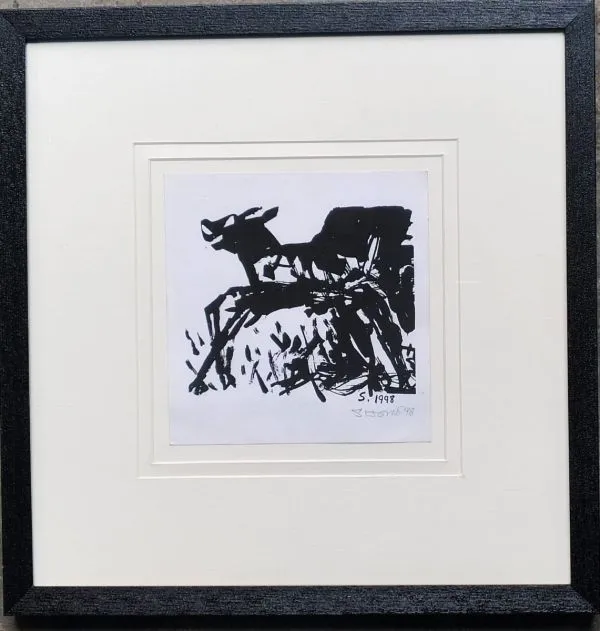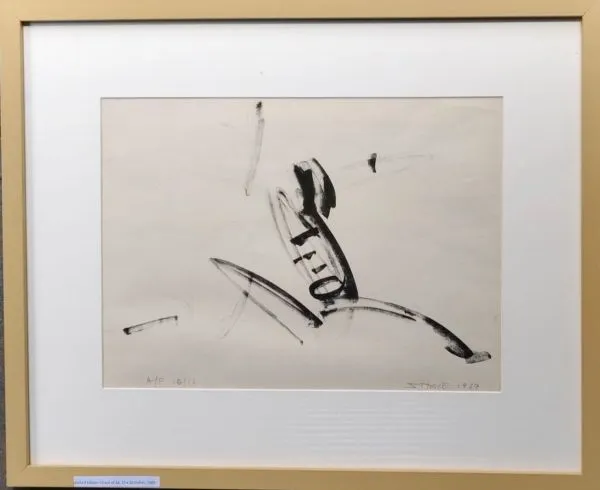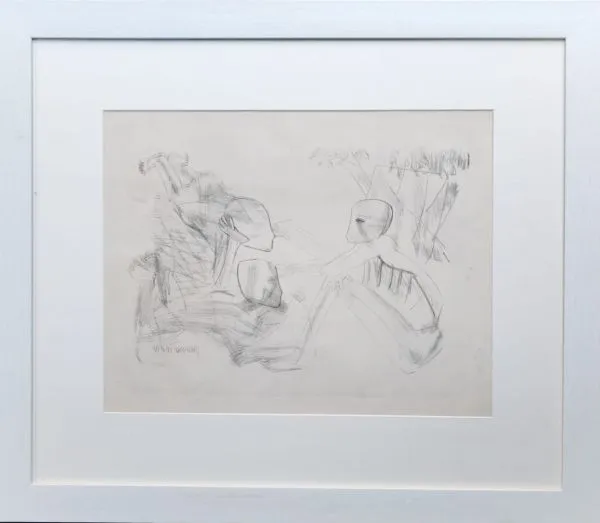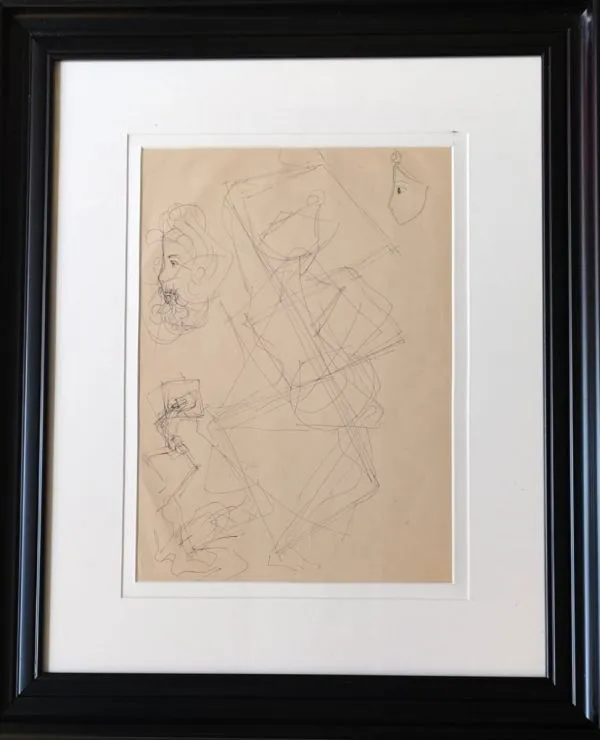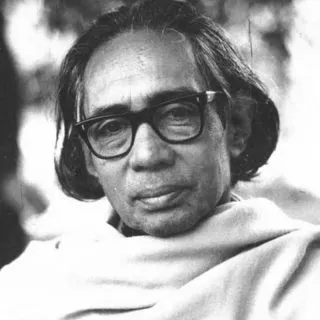
Somnath Hore
About Somnath Hore
Somnath Hore was an artist who was deeply affected by the cataclysms that had changed the social history and fabric of Bengal. Hore's art was always guided by humanist concerns as much as the need to represent the figure who endured such catastrophes and movements with lasting endurance. The Bengal Famine of 1943 and the Tebhaga peasant uprising of 1946 formed the basis of his first artistic engagements.
Hore joined the Government School of Art, Calcutta, in 1945, where he trained under Zainul Abedin and later learnt wood engraving under Saifuddin Ahmed. From 1958-1967 he served as senior lecturer and head of the graphics department at Delhi Polytechnic, and was a visiting professor at the graphics department at MSU Baroda. From 1968-1984 he served as visiting professor at Kala Bhavan, Santiniketan.
He won the National Award in 1960, 1962 and 1963, and in 1979 was made General Council Member of the Lalit Kala Akademi. Among his many shows, he participated in the Lugano International Graphics Biennale, Switzerland, in 1960; the Tokyo Prints Biennale, Tokyo, in 1962; the Venice Biennale in 1962; and the Sao Paulo Biennale, Brazil, in 1963.
Hore's work could be found in the permanent collections of The National Gallery of Modern Art, New Delhi; Lalit Kala Akademi, New Delhi; Ministry of Education, New Delhi; Bahai Museum, New Delhi; Art Heritage, New Delhi; Jehangir Nicholson Collection, Mumbai; Osian's, Mumbai; Birla Academy of Art & Culture, Calcutta; and The Museum of Bengal Modern Art, Calcutta, among others.