Paritosh Sen (1918–2008) stayed in England in 1949, then from 1950 to 1954 in Paris, where he studied at the École des Beaux-Arts, the Académie de la Grande Chaumière, the École du Louvre and André Lhote's school. When he reached Paris in 1950, it was still a living city for fine art. The nerve-centre of modernism had shifted largely to New York by the mid-1940s, but Paris remained resplendent in its creative glory: painters such as Matisse, Braque, Picasso, Rouault and Chagall, and sculptors such as Brancusi and Naum Gabo, were all working in full swing. The city held around 400 art galleries, home to some 50,000 artists from around the world — a holy shrine for art and artists alike.
Several Indian artists were already working in Paris at the time. Nirode Mazumdar was the first Indian to be awarded a French scholarship, alongside his sister Shanu Lahiri, who had just received the AIFACS President's Gold Medal, the first student of her college to do so. Raza, Ram Kumar, Padamsee and other Indian artists were already working there too. Sen's main preoccupation at that time was studying the varied painting of the world: he was a regular visitor to the museums, and to the studios of fellow artists.
Two significant events took place during the first phase of Sen's stay in Paris, which he considered among the greatest experiences of his life: his meeting with Brancusi, and coming face to face with Picasso for a few intimate hours. On 1 May 1953, at the exhibition at the Salon de Mai, he met Picasso for the first time. Picasso asked him to visit his studio on the rue des Grands-Augustins. Accompanied by the filmmaker Barin Saha, then studying in Paris, Sen arrived to find Picasso meeting them at the door and embracing him. Picasso introduced Paloma and Claude, his two children with Françoise Gilot. Sen, who had heard so much of Picasso's contradictory reputation, found himself in his company.
Picasso was said to be gregarious, someone who enjoyed company yet was also drawn to seclusion; reputedly both proud and arrogant; known for a shrewd business sense yet equally generous with his money. Sen unpacked his paintings and propped them against the walls, and Picasso studied them carefully, remarking that they were well done and had good colour. Their stipulated fifteen minutes were over, and Sen started to pack his paintings away, when Picasso interrupted: "I am still looking, are you in a hurry? I am not." Sen said, "I have come here to listen to your criticism. I would consider myself highly obliged if you would kindly point out the flaws in my work." Picasso smiled. "I would say you are moving in the right direction," he said. "You have a good way of mixing colours, and considerable skill in composition. You must always pay attention to form."
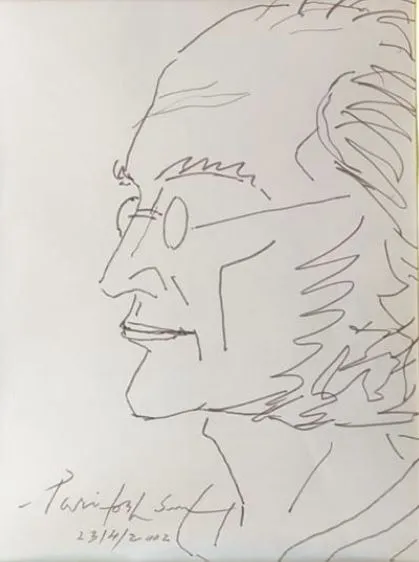
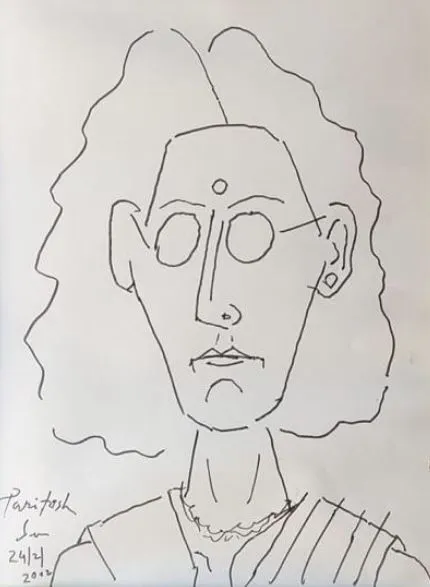
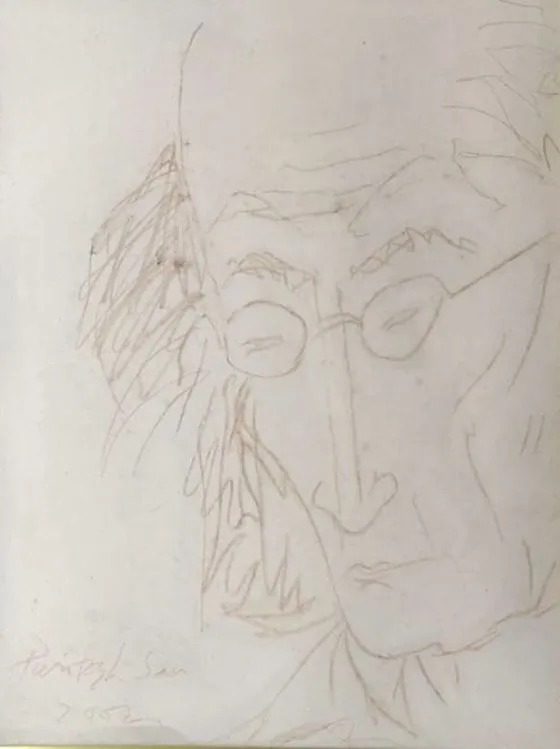
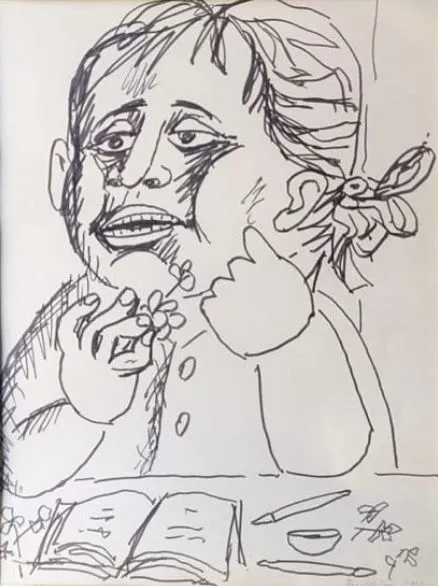
Throughout his long career, Sen painted and drew thousands of self-portraits, often humorous and laced with satire.
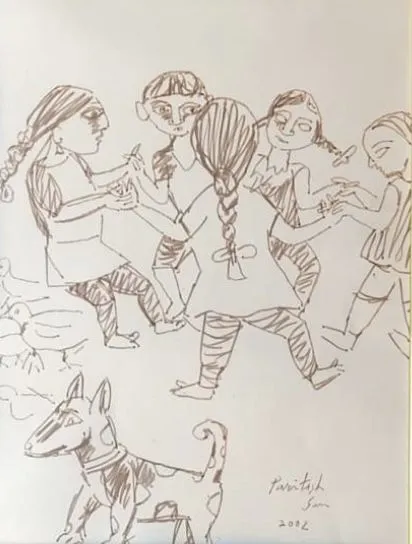
Picasso then made one suggestion: "Have you had any exhibition in Paris? If not, I can ask a gallery to hold one." Without understanding the implications of the offer, Sen said something he would come to regret, that he was returning to India and the tickets were already bought. Refusing Picasso remained a lifelong regret for Sen. The meeting with the most recognised face of twentieth-century art had a lasting impact on him, and Picasso's cubism, and its elements, are evident throughout his long career as an artist of international standing.
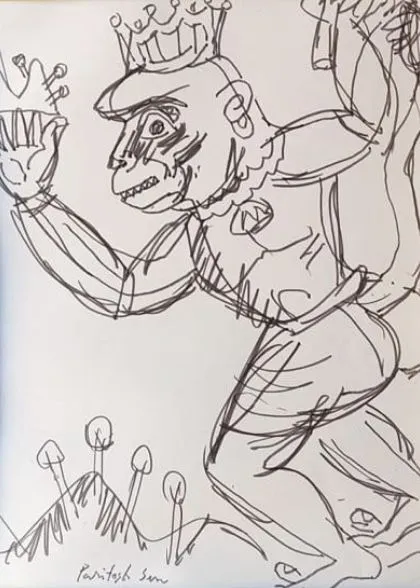
Paritosh Sen worked to harmonise the indigenous art forms of India with the post-impressionist and cubist forms of European Modernism, and was a widely recognised artist in India during his lifetime.
Vinayak Pasricha