The comic muse, they say, does not inspire great art. Noble sentiments, the stuff of awe-inspiring works, are not within its purview. In traditional Indian aesthetics, however, 'hasya rasa' is as valid an emotional state as fear, anger, pity, and so on. Similarly, in contemporary art, the use of wit and irony is not to be dismissed lightly. It has given another dimension to the visual language. Modern sensibility savours its expression, recognising that with the evolution of urban, technological society, art must go beyond traditional genres and express new cultural and emotional values. Wit and irony are now often used as a comment on the conflict between what is considered traditional and what belongs to modernity, serving as a weapon to cut through cant. As in literature, the absurdities of modern existence are underscored with black humour.
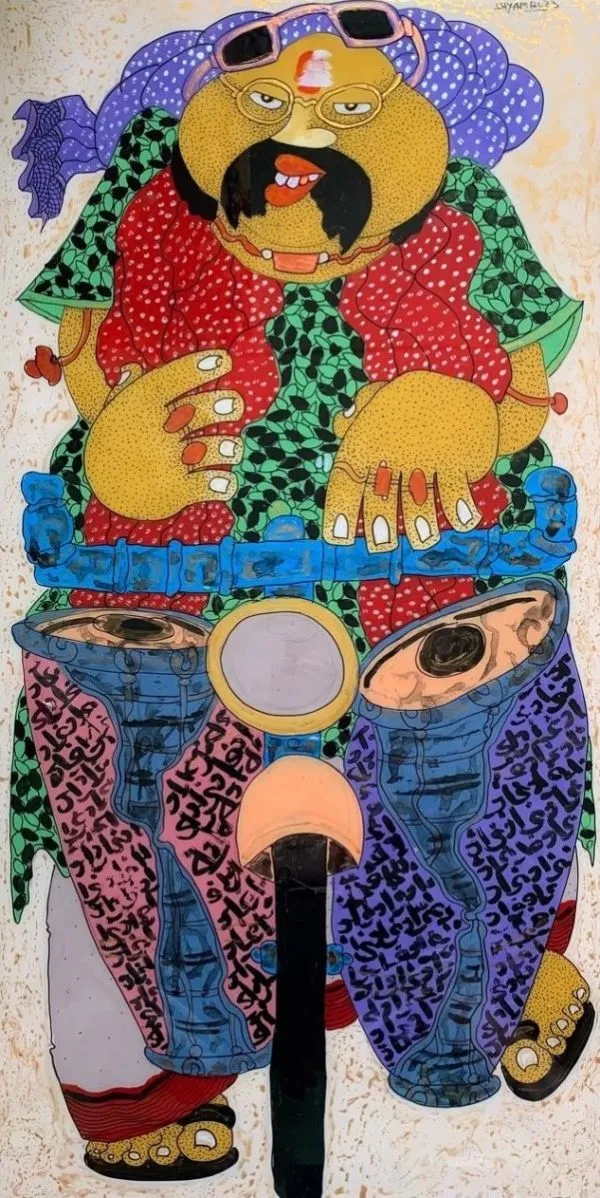
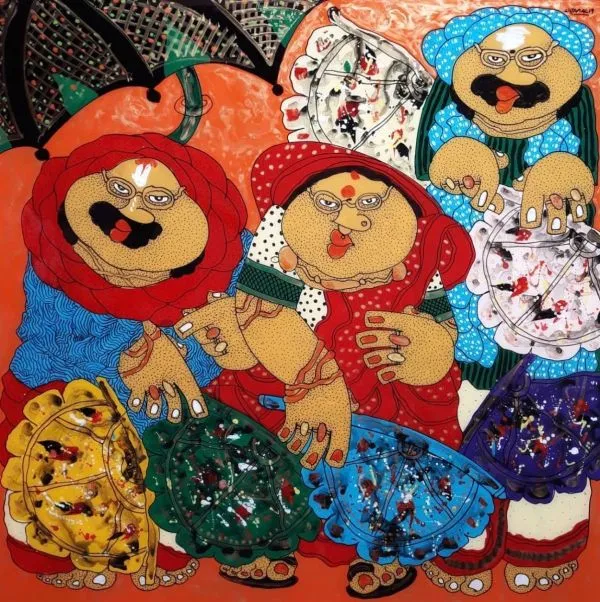
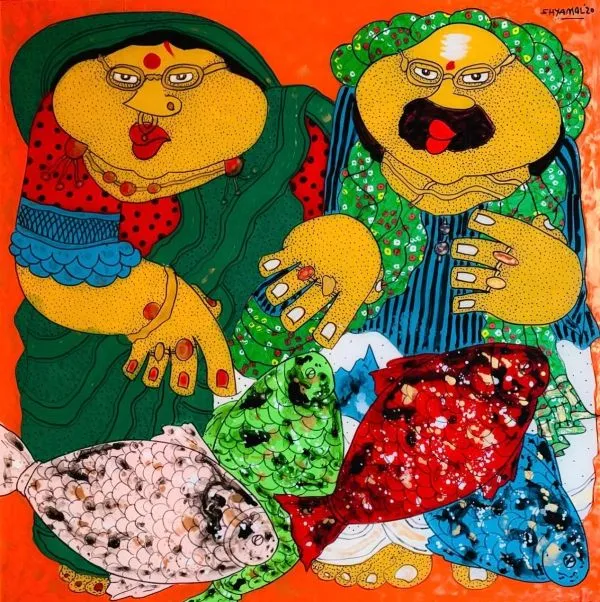
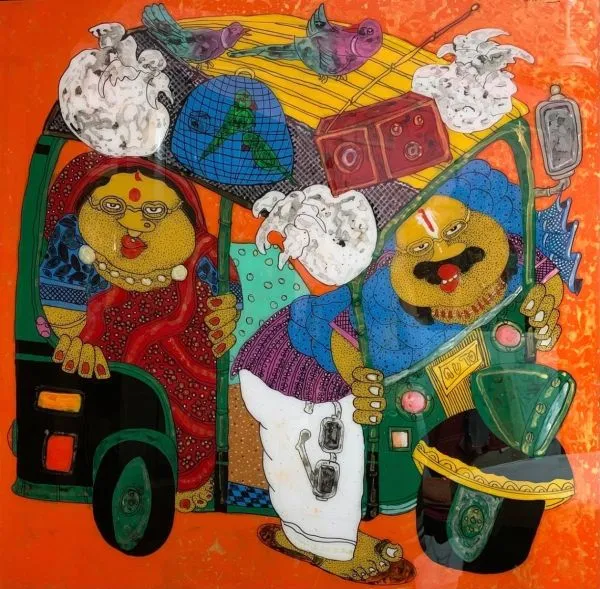
One of the painters who added sharpness to his images with a liberal dose of wit is Shyamal Mukherjee, working in the contemporary art scene in Kolkata. Born in 1961, Mukherjee is known for his highly stylised paintings, executed in the tradition of reverse painting on acrylic sheets. Using this craft, he built a language for the medium suited to both his temperament and a modern viewer's sensibility, bringing new attention to a largely overlooked technique. Mukherjee holds that visual art is primarily built on visual facts and the viewer's response to them. His works draw on layered impulses that temper romanticism with wit and a tinge of eroticism, pushing the medium to its edges.
Characteristic of the artist, his works depict the lives, whims and fancies of the Babu and Bibi, drawing on myth, memory and tradition to express his view of the world with wit and sensuality. His paintings reflect his interactions with people during his travels and his study of Bengali folk cultural practices. In his own words: "Most of my inspiration comes from observing people around me."
The men and women around him — musicians, auto drivers, gods and deities, calendar images on the walls, film stars and snake charmers — find their way into his paintings. A parallel restlessness has taken him into villages, marketplaces and local fairs, where the colour he found became a recurring source for his work.

A desire to draw and to make a mark took hold of him as a young boy, and he pursued it with dedication, rising at dawn to draw with a concentration that surprised those around him. That commitment carried through to his daily attendance at painting classes at Rabindra Bharati University. His approach to his craft caught the attention of Shanu Lahiri, then Dean of the Visual Arts Faculty, who encouraged him. From his college days onward, he was engaged in searching for a new way of looking at things.
The visualisation of his characters extends, to some degree, from his own preference for bold, bright colours, visible in his choice of clothes and even his cars. Drawing on many visual idioms, Mukherjee arrived at a style of his own. His large, heavy-set figures of men and women are built for humour, and most find their way to a smile.
- Vinayak Pasricha