Modernism in Indian art is often said to have begun with the Bombay-based Progressive Artists’ Group, but that claim has been challenged.
The Calcutta Group was formed four years before the Progressive Artists’ Group and had an early role in shaping modern Indian art. Its artists witnessed the rise of nationalism and the effects of colonialism at close range, and their work reflected these observations well before the Progressive Artists’ Group existed.
After the Calcutta Group formed in 1943, artist collectives followed elsewhere in India: the Progressive Painters’ Association under K.C.S. Paniker in Madras in 1944, the Progressive Artists’ Group in Bombay in 1947, and the Delhi Shilpi Chakra in 1949. The Calcutta Group is not always given credit for this influence.
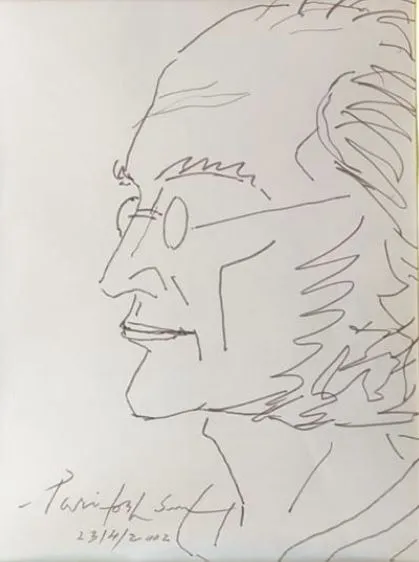
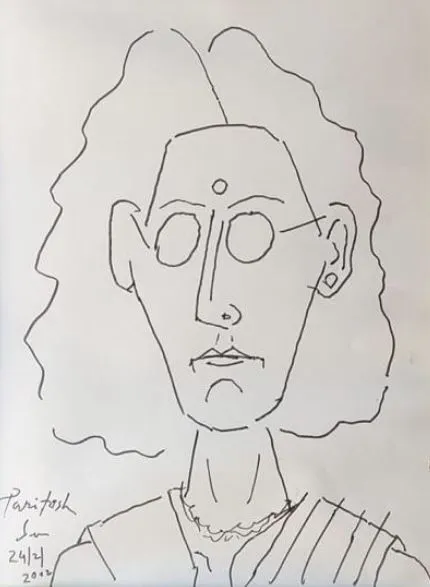
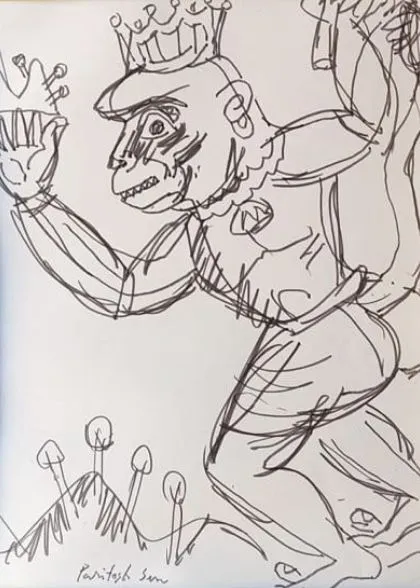
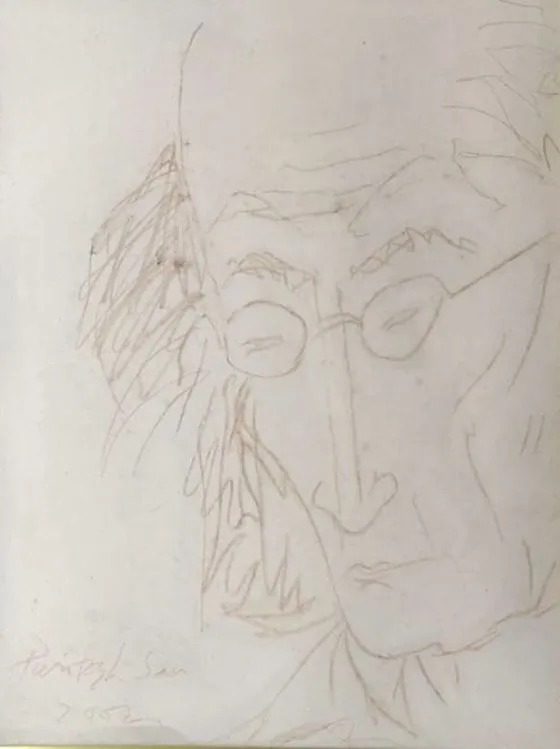
The founding members of the Calcutta Group in 1943 were Nirode Mazumdar, Gopal Ghose, Kamala Dasgupta, Prodosh Dasgupta, and Paritosh Sen. Later, Abani Sen, Rathin Mitra, Gobardhan Ash, Sunil Madhav Sen, and Hemanta Mishra joined the group. Although Ramkinkar Baij took part in their exhibitions, he never formally became a member.
The group’s first exhibition was held at the Services Arts Club, 28 Chowringhee Road, from 8 to 18 March 1945, with works by Nirode Mazumdar, Prodosh Dasgupta, Kamala Dasgupta, Gopal Ghose, Prankrishna Pal, and Paritosh Sen.
A critical review in Amrita Bazar Patrika on 27 March 1945 stated:
“A group of seven artists of this city have branded themselves under the label ‘Calcutta Group’, a happy echo of the unhappy ‘London Group’. The Calcutta Group, like its London prototype, claims to be held together by a common creed to abjure academic ‘conventions,’ Indian or European, while adhering to Indian traditions.”
Similarly, a critic in The Statesman wrote:
“The source from which the Calcutta Group—who, I expect, would issue a manifesto of their artistic preferences—derives its inspiration from Gauguin, Modigliani, and Matisse.”
In January 1949 the group held its fourth annual exhibition at Artistry House, 15 Park Street, which drew praise from critics and the press. The Calcutta Group’s central aim was to bring Western modernism together with Indian realities. It had formed in 1943, a year of famine and disease in Bengal, on the conviction that human resilience would continue to shape fine arts even amid social upheaval.
By the late 1940s many members had moved to Paris, then the centre of the international art world. Nirode Mazumdar was the first Indian artist to receive a French Government Scholarship, in 1947. Prodosh Dasgupta studied sculpture at the Royal Academy in London. Others who later followed this path to Europe included Paritosh Sen, S.H. Raza, Ram Kumar, Shanu Lahiri, Sankho Chowdhury, Haimanti Sen, Anjolie Ela Menon, and Akbar Padamsee.
The Calcutta Group was among the first organised art movements in India and Asia, and its work laid groundwork for modernism in Indian art that followed.
Vinayak Pasricha.