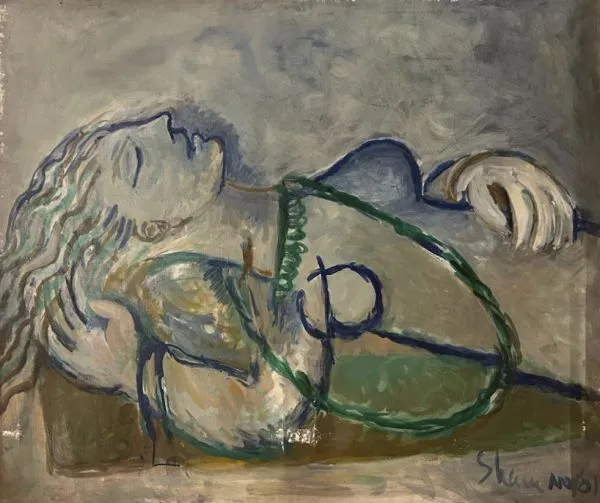
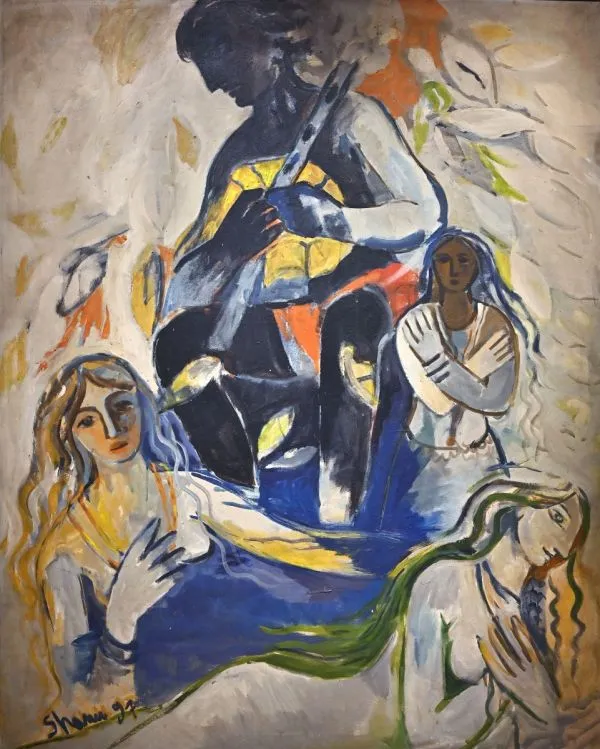
Kamal Kumar Majumdar (1914–1979), Nirode Mazumdar (1916–1982) and Shanu Lahiri (born Majumdar, 1928–2013) belonged to one of Calcutta’s well-known artistic families. Their parents, Prafulla Chandra Majumdar and Renukamoyee Majumdar, who hailed from Taki, encouraged each of their seven children to excel in a chosen field, and each pursued a different creative direction. From an early age their mother took the children to the Jorasanko Thakurbari to see nritya-natyas. Shanu Lahiri recalled in her memoirs that her mother also took the siblings to plays on the Calcutta stage, where they saw Sisir Bhaduri and Ahindra Chowdhury perform. Poets, actors and writers such as Vishmadev Chattopadhyay frequented their home; the children learnt French and were exposed to Western and Eastern literature from an early age. As at the Tagore household in Jorasanko, where each member worked in the arts, the Majumdar children grew up in an atmosphere of intense creativity, in a Calcutta that was at the heart of the cultural movement.
Three siblings, Kamal Kumar Majumdar, Nirode Mazumdar and Shanu Lahiri, made their mark in the visual arts. Their sister Bani Majumdar (1918–1996) was a dancer who, after meeting Rabindranath Tagore at Santiniketan, furthered her training and performed in several dance dramas written by Tagore and choreographed by Shantidev Ghosh. In 1938 she toured Europe with the Seraikella Chhau performers under the impresario Haren Ghosh, the only woman dancer permitted to take part in those performances. Another sister, Gita Majumdar (1922–1993), was a singer trained in the Lucknow Gharana.
Although Kamal Kumar Majumdar is remembered today chiefly as a writer, his interest in drawing and painting continued alongside his writing. He was one of the notable prose writers of the mid-20th century, known for a radical style, and was equally engaged with painting, woodcuts and theatre. He also taught school and drew a following among younger readers. Throughout his work, Kamal Kumar Majumdar set aside conventional approaches to Bengali art and literature and tried to bring older traditions together with new ideas.
Nirode Mazumdar was a painter of the first generation of Indian modernists and a founding member of the Calcutta Group. He trained initially at the Indian Society of Oriental Art in the Bengal School style under Abanindranath Tagore, and received the Norman Blout Memorial Award there. After the Second World War, in 1947, he travelled to France on a French Government Scholarship to study art in Paris. There he studied and exhibited with the École des Beaux-Arts and learnt art history and nineteenth- and twentieth-century painting at the École du Louvre, and studied in the studio of André Lhote. In 1949 he held a one-man show at Gallery Barbizon, presented by the critic Stanislas Fumet, and visited Utrecht the same year to learn the technique of engraving, which later shaped his work. He left France for England in 1951, where he took part in exhibitions organised by the Indian High Commission and group shows at India House, and worked for a time as curator of its art gallery. His outlook began to shift while he was in London.

In 1955 he returned to France. Back in Paris, Nirode Mazumdar continued his research while turning to Eastern philosophy, mythology and his own cultural heritage, and in 1957 exhibited a series of oil paintings, Images Ecloses (Blooming Images), in his Paris studio — the result of that research, presented by Jeannine Auboyer, curator of the Musée Guimet. It proved a turning point in his career. His years of living, working and studying in France and England, and close contact with artists and thinkers including Braque, Brancusi and Jean Genet, deepened his interest in the sacred underpinnings of traditional art, regardless of the religion it grew from. After eleven years in Europe, Nirode Mazumdar returned to Calcutta in 1958 and kept working across pictorial, aesthetic and philosophical questions on large canvases. He moved gradually towards Tantric themes, often exploring a single idea across a series of paintings. His work stayed rooted in the pictorial tradition of Bengal, harmonised with European modernism, and he took part in developing what Bengal’s artists called ‘Indian Modernism’.
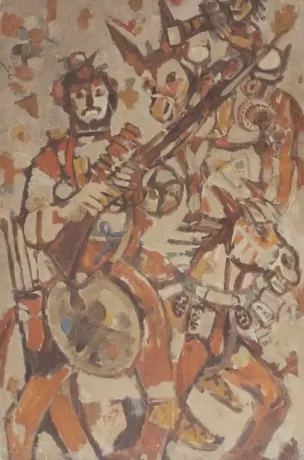
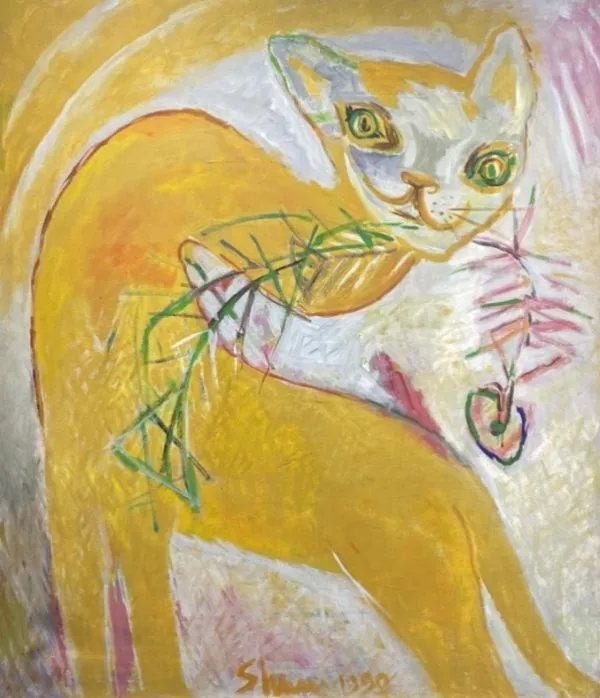
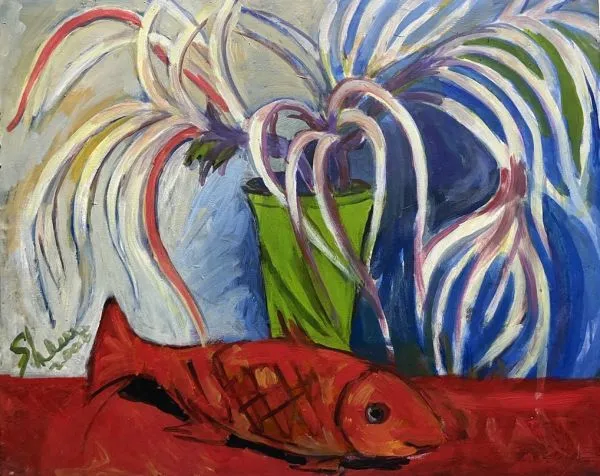
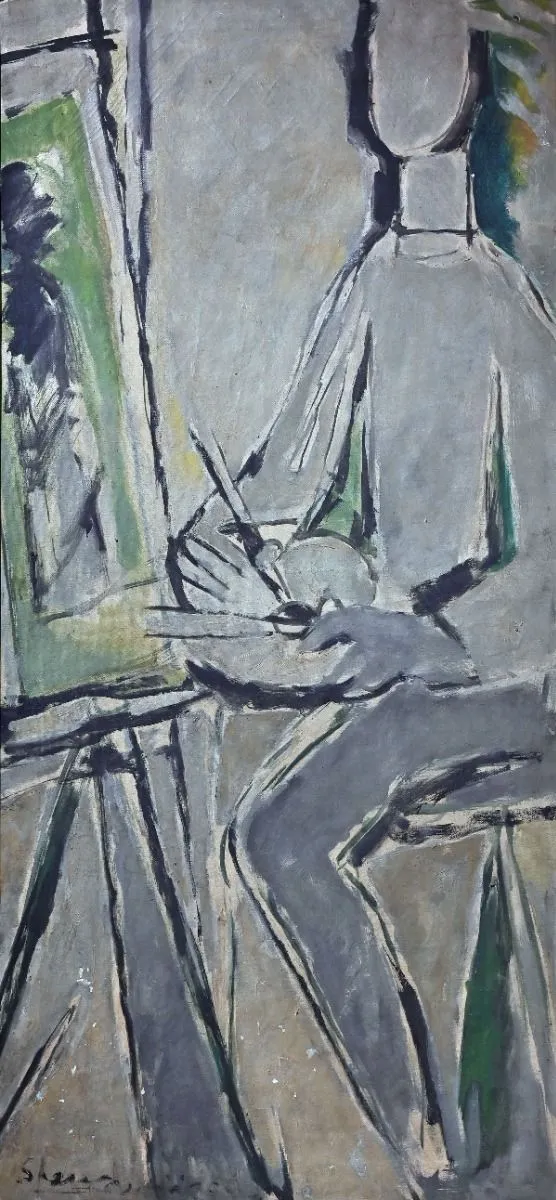
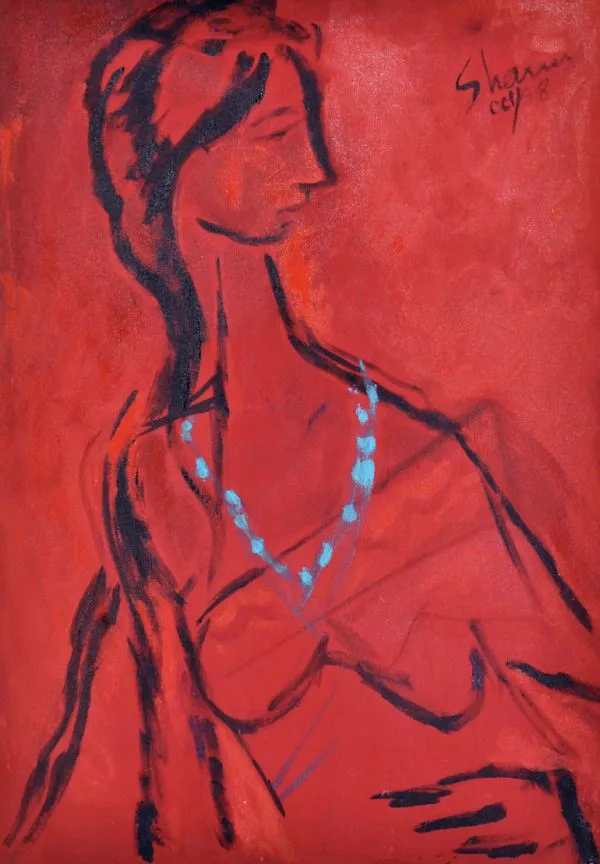
Shanu Lahiri, visual artist, poet and educator, was among the first generation of modernists to emerge in post-colonial India. She trained at the Government College of Art and Craft, joining in 1947, the year of India’s independence, as one of few women students, under Atul Bose and Ramendranath Chakravorty. In 1951 she became the first student of the college to receive the AIFACS President’s Gold Medal. She received a French Government Scholarship in 1956 and studied in Paris for two years, at the École du Louvre, where she studied art history and appreciation, and at the Académie Julian, where she learnt painting. Shanu Lahiri is remembered for the public art projects she initiated in Kolkata and elsewhere, including Rwanda, and for finding ways to bring art within reach of ordinary people.

She kept her main commitment to painting and drawing, but tested new mediums and surfaces across different phases of her career, and took up sculpture, moving from small clay and perfume-bottle figures to bronze casting. As one of Calcutta’s most prominent public artists — dubbed “the city’s first lady of public art” — her activist instincts led her to organise community painting drives that covered political graffiti on the city’s walls. In 1983, Calcutta saw the formation of India’s first women artists’ group, ‘The Group’, made up of five painters and sculptors: Karuna Shaha, Shanu Lahiri, Santosh Rohatgi-Moitra, Shyamasree Basu and the sculptor Meera Mukherjee. The artists founded it because most existing groups included no women at all.

The work of the siblings Kamal Kumar Majumdar, Nirode Mazumdar and Shanu Lahiri traces a number of the social, political and cultural milestones of pre- and post-colonial India, especially in Bengal. Their lives and work reflect the transitions of the period — the Second World War, India’s freedom struggle, the Bengal Famine — and carry forward something of the Bengal Renaissance.
Vinayak Pasricha.